
What to pay attention to during the installation process of solar street lights?
1. Comprehensively understand the characteristics of solar street light fixtures, light sources, and lamp posts, based on actual road conditions and reference lighting standards, combined with investment budgets, select solar light fixtures, light sources, and lamp posts reasonably, in order to fully leverage the high efficiency and energy-saving of light sources, the advantages of solar light distribution, and the combination of accessories.
2. Under the condition of ensuring lighting performance, appropriately increase the spacing between solar street light fixtures to save the number of fixtures; Appropriately increase the height of solar street lamp poles to improve lighting efficiency; Try to place poles in the middle of the road divider as much as possible to save project costs.
3. In combination with road engineering, timely and advance intervention in pole position selection, foundation construction, and pre embedding is necessary to promptly identify problems, make reasonable changes, ensure quality, and save investment.
4. Based on the actual and geological conditions of the solar street lamp construction site, design and manufacture the solar street lamp pole foundation and high pole lamp foundation to ensure that the foundation is firm and reliable. Special attention should be paid to the compatibility between the embedded bolts and the reserved holes in the rod seat, accurate positioning, reasonable embedded and external lengths, and proper protection of the threaded parts for easy lifting and positioning.
5. In rock formations and wind fossil areas, it is difficult to achieve the requirements for dispersed and segmented grounding. It can be considered to connect conductors such as galvanized flat steel according to the design requirements. The connection should be reliable, and appropriate protective measures should be taken. It should also be reliably connected to the embedded foundation to ensure that each lamp post is reliably connected to the ground. High pole solar street lights are relatively scattered and mainly rely on basic grounding. If necessary, resistance reducing agents should be used to reduce grounding resistance.
6. Lifting operations must strictly follow the operating procedures. Special attention should be paid to the power grid and other lines around the lifting equipment, as well as surrounding structures. During lifting, the lifting points should be reasonable and adjusted in a timely manner after positioning.
7. Pay attention to the aesthetics of the solar street lamp post after installation. Starting from the basic construction, the straightness of the lamp positions should be controlled based on the main line, and the road design should be changed reasonably. The lamp posts should be straight, and the processing welds and inspection openings should avoid the main direction, and the entire line should be consistent. The inclination angle of the cantilever of the lamp post should maintain coordination in direction and angle.
- The internal accessories and connectors of solar street lamps should be tightly and firmly inserted to avoid faults caused by loose wind swings and poor contact. The solar street light fixture is reliably fixed to the lamp post and the lamp post is reliably fixed to the cantilever. Each pole of the solar street lamp should be installed in place, and the lifting bracket and lighting fixtures should be reliably fixed. The lifting system should be safe and reliable, and functions such as lifting, limiting, and positioning should be complete.
Case study of solar street light engineering
Why are solar street lights becoming more and more popular?
Related Article
revolutionizing community spaces and championing sustainable practices. By harnessing the power of the sun,
these innovative lighting solutions not only illuminate these areas but also symbolize a commitment to environmental stewardship and a greener future.
Join us as we delve into the myriad benefits that solar lighting brings to enhance community spaces and promote sustainability.
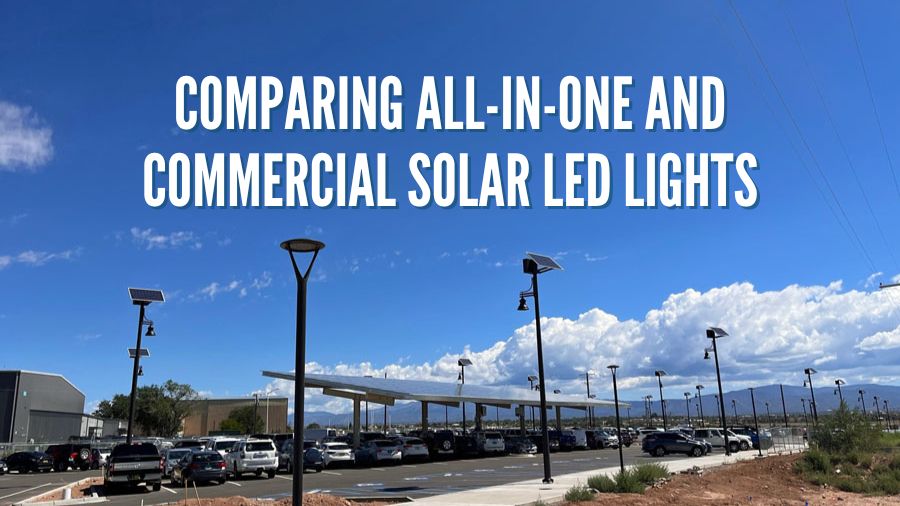
While both claim to offer efficient, sustainable illumination, they differ considerably in design, performance, and information transparency.